Pennsylvania State Tax Calculator
A Pennsylvania state tax calculator turns a salary into state tax at the commonwealth's single flat rate, then stacks federal income tax, FICA and take-home pay on top so the whole picture is visible.
Estimate your Pennsylvania income tax
How Pennsylvania taxes a salary
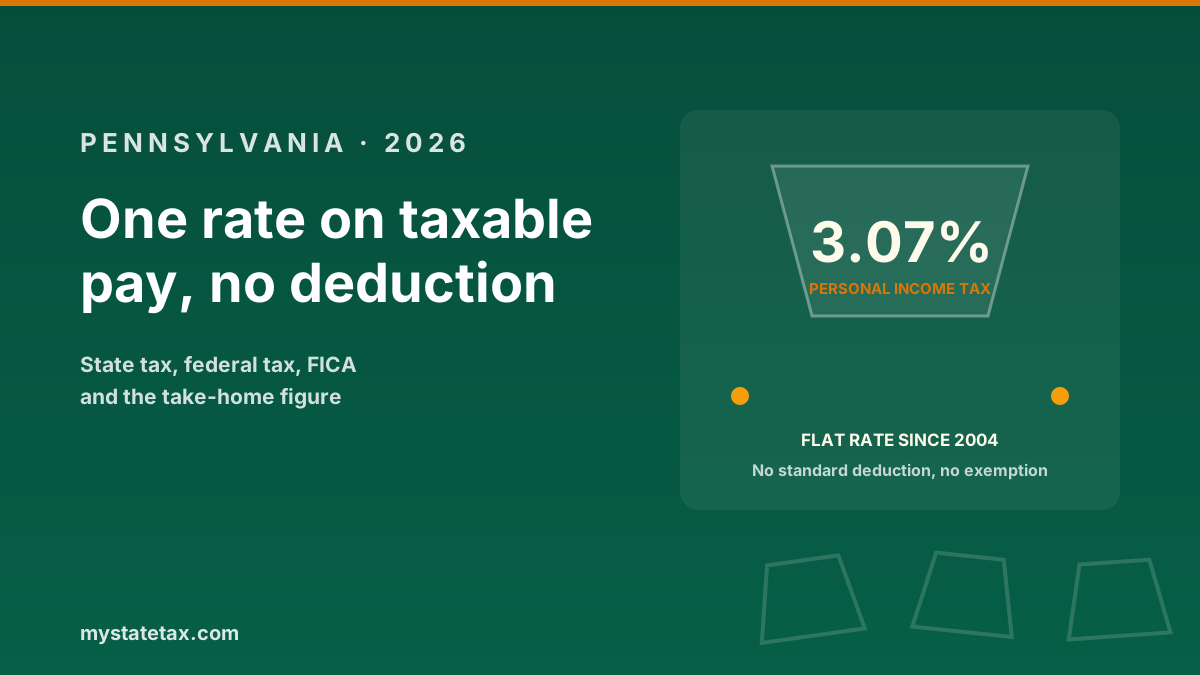
Pennsylvania uses one of the simplest income tax structures in the country: a single flat rate applied to taxable income, with no brackets, no standard deduction and no personal exemption. This Pennsylvania state tax calculator applies that rate to the compensation you enter, then shows what federal income tax, Social Security and Medicare take and what is left.
The taxable base is not the federal one. Pennsylvania taxes eight classes of income separately, so a loss in one cannot offset income in another, and compensation is taxed as it is paid. The deductions the commonwealth allows are narrow: contributions to medical savings accounts, health savings accounts and 529 tuition programs, plus certain unreimbursed employee expenses.
Pennsylvania's 2026 rate and taxable base
| Item | 2026 position |
|---|---|
| Personal income tax rate | 3.07% |
| Rate history | Unchanged since 2004 |
| Structure | Single flat rate — no brackets and no filing-status schedule |
| Standard deduction | None |
| Personal exemption | None |
| Deductions allowed | MSA, HSA and 529 tuition program contributions; qualifying unreimbursed employee expenses |
| Classes of income | Eight, taxed separately — a loss in one cannot offset another |
Because the base is compensation as paid, most payroll deductions that shrink the federal base do not shrink the state one, and the short list above is the exception worth planning around. Two relief valves sit on a filed return: Tax Forgiveness can reduce or wipe out the liability for lower income households, and credit is allowed for income tax paid to other states.
How to use this calculator
- Enter the salary the year will pay. Type your pay before tax as an annual total — a weekly figure times 52, a biweekly figure times 26.
- Set the filing status on the federal side. Enter 1 for Single, 2 for Married filing jointly or 3 for Head of household: the state rate is identical for all three.
- Add the deductions Pennsylvania allows, if any. MSA, HSA and 529 tuition program contributions count, along with qualifying unreimbursed employee expenses; leave the field at 0 if none apply.
- See what a Pennsylvania paycheck calculator leaves. The breakdown lists Pennsylvania taxable income, the state tax, the federal income tax, Social Security, Medicare and the yearly remainder.
Frequently asked questions
What is the Pennsylvania income tax rate for 2026?
3.07%. Pennsylvania has charged that single rate since 2004 and it applies to every filer regardless of income or filing status, so there are no brackets to climb.
Does Pennsylvania have a standard deduction or personal exemption?
Neither. The only reductions come from a short list of deductions — MSA, HSA and 529 tuition program contributions and qualifying unreimbursed employee expenses — plus exclusions, credits and Tax Forgiveness.
How much state tax comes out of a $60,000 salary in Pennsylvania?
About $1,842, because the state takes 3.07% of taxable compensation with nothing subtracted first. Federal income tax on the same salary is about $5,020, with Social Security and Medicare on top.
Is a Pennsylvania state income tax calculator the same as a federal one?
No. The federal calculation starts with a standard deduction and runs income through seven rates from 10% to 37%, while Pennsylvania applies one rate to taxable compensation.
What local taxes apply on top of the state rate?
Many municipalities and school districts levy their own earned income tax, and Philadelphia has a separate wage tax — set locally, so they are not part of this estimate.
What a Pennsylvania salary keeps in 2026
| Gross salary | Pennsylvania income tax | Federal income tax | Social Security + Medicare | Take-home pay |
|---|---|---|---|---|
| $60,000 | $1,842 | $5,020 | $4,590 | $48,548 |
| $80,000 | $2,456 | $8,770 | $6,120 | $62,654 |
| $100,000 | $3,070 | $13,170 | $7,650 | $76,110 |
| $150,000 | $4,605 | $24,734 | $11,475 | $109,186 |
The rows assume a single filer, no deductions allowed by Pennsylvania, the 2026 federal standard deduction and no other pre-tax items. The state column is the flat rate applied to salary, so it holds the same percentage from the first row to the last, while the federal column grows faster as each dollar can fall into a higher bracket.
Local earned income taxes levied by municipalities and school districts are not in these figures, and neither are the credits that reduce a filed return.
Sources
- IRS — Tax inflation adjustments for tax year 2026 (standard deduction and rate schedules)
- IRS — Topic no. 751, Social Security and Medicare withholding rates (6.2% and 1.45%, $184,500 wage base)
- Pennsylvania Department of Revenue — Personal Income Tax (3.07 percent rate, no standard deduction or exemption, allowable deductions)
- Pennsylvania Department of Revenue — Personal Income Tax Rates (3.07% in effect since 2004)